Close the main valve, keep away from wet electrical equipment, take photos[FEMA], and get drying started; the EPA puts the window at 24 to 48 hours[EPA].
Emergency water removal for Spring homes
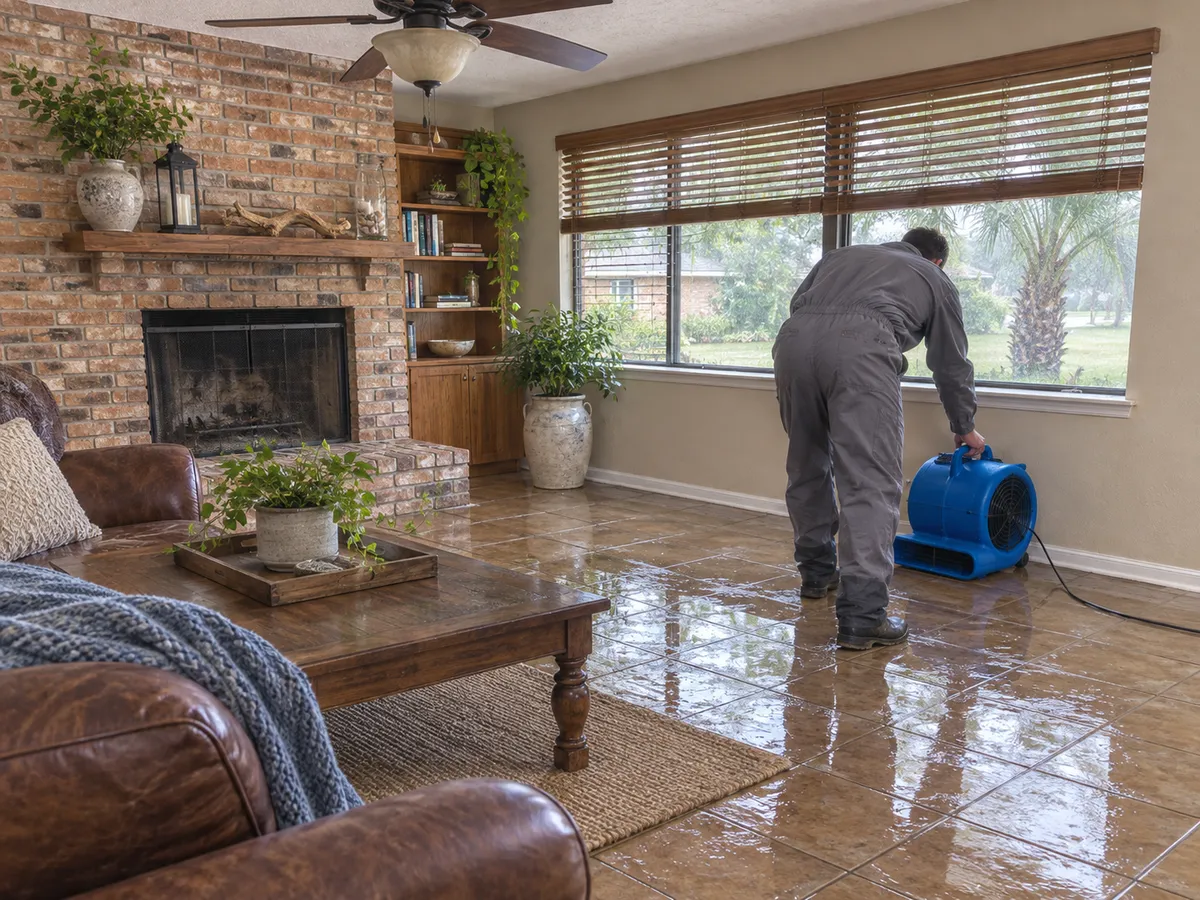
The first step in any Spring water damage call is water extraction. Standing water comes out with pumps and extraction wands, soaked pad is pulled, and moisture meters trace how far water traveled under baseboards and cabinets on the slab.
Next is mitigation and structural drying. Materials that cannot be dried in place come out, and air movers and dehumidifiers run until readings show the structure is dry. EPA guidance is to keep indoor humidity under 60 percent[EPA], and the CDC recommends fans and dehumidifiers to help[CDC].
What happens after you call
- Stop the source. Close the main shut-off or the fixture valve.
- Document. Photos and video before anything moves[FEMA].
- Extract. Standing water out of floors, carpet and pad.
- Dry and verify. Equipment runs until moisture readings are normal.
Flood, sewage and pipe damage in Spring
- Flood cleanup in SpringMud, debris and wet materials after a flood.
- Sewage cleanup in SpringToilet, drain and sewer line backups.
- Crawl space water removal in SpringStanding water under raised homes.
About Spring: homes, water and flooding
- 23,546
- housing units
- 1993
- median year built
- 74%
- owner-occupied
- 22.49 sq mi
- land area
The Census Bureau counts 23,546 housing units in the Spring census-designated place; 86% are single-family detached houses and 74% of occupied homes are owner-occupied[U.S. Census Bureau]. Much of the housing is recent. 20% of homes in the Spring census-designated place were built in 2010 or later, with a median year built of 1993[U.S. Census Bureau]. Newer homes still have supply hoses, water heaters and drain lines that can fail.
During Hurricane Harvey, the National Weather Service logged 31.12 inches of rain at the 7.10 WSW Spring gauge between August 25 and 31, 2017[NWS Houston/Galveston]. Any address in Spring can be checked against the FEMA flood map[FEMA Flood Map Service Center]. Harris County homeowners can also use the Flood Control District’s Flood Education Mapping Tool, which shows mapped floodplains relative to homes[Harris County Flood Education Mapping Tool].
Water and sewer service around Spring comes from local utility districts rather than a single city department. The Texas PUC water utility search lets you look up the provider by name or county[Texas PUC water utility search], and the district’s number is on your water bill.
Nearby
Houston, Pearland and Sugar Land have their own pages. See every city on the Harris County page.