Houston, Pearland, Sugar Land, Spring, Rosharon and Sealy
Houston water damage restoration, one call away
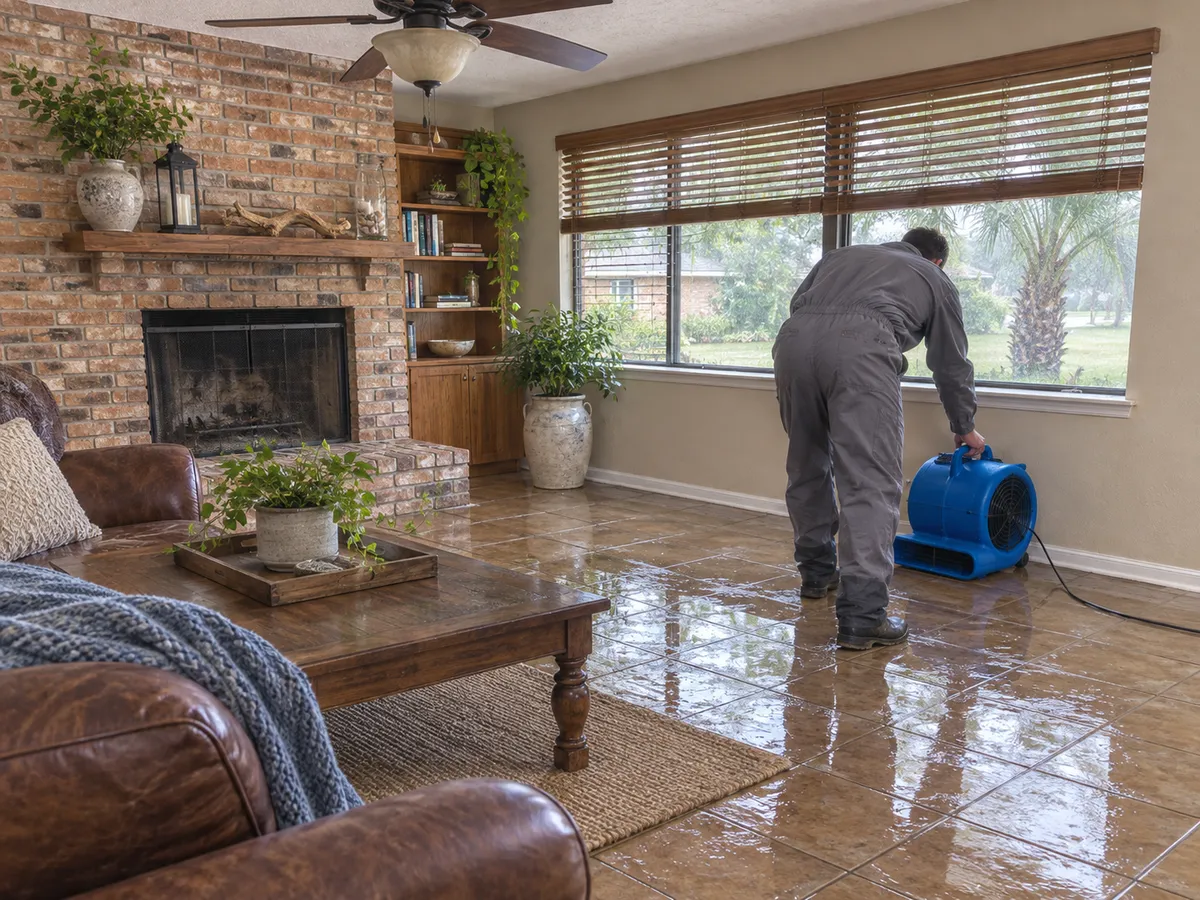
Call to be connected with an independent restoration company for emergency water removal, water extraction, mitigation and flood cleanup.
Close the main shut-off, stay away from wet outlets[CDC], photograph the damage[FEMA] and get drying started within 24 to 48 hours[EPA].
Water damage help
- Emergency water removalPumping and extraction of standing water.
- Water extractionWater pulled from carpet, pad and hard floors.
- Water mitigationRemoval of wet materials and controlled drying.
- Water damage cleanupSoaked materials out, surfaces cleaned, structure dried.
- Flood restorationRising water and storm flooding.
- Flood cleanupMud, debris and wet materials after a flood.
- Sewage cleanupToilet, drain and sewer line backups.
- Burst pipe water damageSplit supply lines and frozen pipes.
- Crawl space water removalStanding water under raised homes.
Why drying speed matters here
Gulf Coast air is humid, which slows natural drying. The EPA recommends drying wet materials within 24 to 48 hours and keeping indoor humidity below 60 percent[EPA]. Restoration crews use dehumidifiers and air movers to get there, and moisture meters to confirm it.
Flooding is part of life in this region. During Hurricane Harvey in 2017, the National Weather Service recorded storm totals of more than 30 inches at gauges across Houston, Pearland, Sugar Land and Spring[NWS Houston/Galveston].
What water damage restoration in Houston includes
A water damage restoration job in Houston follows a set order. Each stage depends on the one before it, so the work is planned before the equipment comes off the truck.
- Inspection and moisture mapping. The technician confirms the leak is stopped, then maps how far the water traveled with moisture meters and infrared cameras.
- Water removal. Submersible pumps take out deep water, and extraction units pull water from carpet, pad and hard floors. Mechanical extraction removes water much faster than air drying can.
- Removal of what cannot dry. Soaked pad, baseboards, the lower part of wet drywall and wet insulation come out when they cannot be dried in place. Per the EPA flood cleanup guide, anything wet that cannot be fully cleaned and dried inside 24 to 48 hours goes[EPA flood cleanup guide].
- Structural drying. Air movers push air across wet surfaces while dehumidifiers pull the moisture out of the air. The EPA target is indoor humidity below 60 percent[EPA].
- Cleaning. Surfaces touched by contaminated water are cleaned and disinfected. The CDC says to throw away items that cannot be disinfected, such as wall coverings, cloth, rugs and drywall[CDC].
- Final readings. Equipment stays until moisture readings in the walls, subfloor and framing return to normal, and those readings are written down.
Water categories and why they change the job
Restoration companies sort water by how contaminated it is, using the IICRC categories. Category 1 comes from a clean source such as a supply line or faucet. Category 3 is grossly contaminated: sewage, waste line backflows from beyond a trap, seawater, rising rivers or streams, and contaminated wind-driven rain[IICRC 2026 position statement]. Category 2 falls between the two.
The category decides the order of work. Category 1 drying can start right away without contamination controls, while Category 2 and 3 losses get cleaned up under contamination controls before drying begins[IICRC 2026 position statement]. Rising creek and bayou water in Houston counts as Category 3, which is why flooded drywall and carpet usually come out instead of being dried in place.
A clean leak does not stay clean forever. Time and temperature can change the category[IICRC 2026 position statement], and Gulf Coast heat speeds that up.
Where water hides in Houston homes
Most homes around Houston are built on concrete slabs, so water does not drain into a crawl space. It spreads sideways under baseboards, cabinets and flooring into the next room. That is why the wet area on the meter is often larger than the wet area you can see.
Air conditioning is a frequent source. The EPA advises keeping AC drip pans clean and drain lines unobstructed and flowing[EPA], and notes that pans which do not drain can let water into the system[EPA]. When the air handler sits in the attic, an overflowing pan usually shows up first as a ceiling stain.
Places to check:
- Inside walls around leaking or sweating pipes[EPA]
- Under vinyl plank, laminate and carpet pad
- Behind the refrigerator ice maker line and dishwasher
- Under the water heater and washing machine
- Wall surfaces behind furniture, where condensation forms[EPA]
- Roof materials above ceilings after a roof leak[EPA]
Watch for a damp smell, baseboards that swell, stains that grow, floors that cup or buckle, and a water bill higher than normal.
Bayou flooding and Houston water damage
Harris County covers 1,756 square miles and drains through 22 major watersheds[Harris County Flood Control District]. The Flood Control District maintains about 2,500 miles of channels, compared with roughly 800 miles of natural channels that originally drained the area[Harris County Flood Control District]. Much of the city is flat, so heavy rain can overwhelm streets and bayous within hours.
During Hurricane Harvey, flooding hit nearly every one of the 22 watersheds in Harris County, 10 of the 19 official forecast points on the bayous reached record crests, and the Flood Control District estimated that nearly 136,000 structures flooded[NWS Houston/Galveston].
For restoration, bayou water is Category 3[IICRC 2026 position statement]. Expect soaked drywall, insulation, carpet and pad to be removed, the structure cleaned, and then a longer drying period than a clean pipe leak.
Storm season, outages and generator safety
Beryl came ashore near Matagorda on July 8, 2024 as a Category 1 hurricane with 80 mph winds, dropping around 4 to 8 inches of rain on average and 10 to 15 inches in some swaths[NWS]. CenterPoint’s tracker showed more than 2.2 million homes and businesses without power[Houston Public Media].
An outage matters for water damage because dehumidifiers and air movers need electricity, and without air conditioning indoor humidity climbs quickly. Restoration crews often bring generators to keep drying on schedule.
If you use a generator, keep it outdoors, at least 20 feet from doors, windows and vents, never in the garage, and run a battery carbon monoxide detector inside[CDC]. Carbon monoxide caused two indirect deaths after Beryl[NWS].
Toilet and drain backups
Sewage is Category 3 water[IICRC 2026 position statement]. Keep children and pets out of the area, do not run fans that blow air from the wet room into the rest of the house, and do not try to dry it in place. Soaked carpet, pad and drywall are removed and the area is cleaned and disinfected before drying.
Houston Public Works says about 70 percent of sewer overflows are caused by fats, oils, grease and wipes, and that overflows double when temperatures drop[Houston Public Works]. Its advice when a toilet backs up: check the cleanout near the street. Sewer water standing in the cleanout means a city-side problem and a call to 311; no water there points to a blockage in your private line and a call to a plumber[Houston Public Works].
Only flush the three P’s, and keep “flushable” wipes out of the toilet[Houston Public Works].
Questions to ask the restoration company
- What category is the water, and how does that change the plan?
- Where did the moisture meter show water, and how far did it spread?
- What needs to be removed, and why can it not be dried?
- How many dehumidifiers and air movers will run, and how often will someone check readings?
- Will I get a written scope and daily drying logs?
- Are the technicians on this job IICRC-certified?
Clear answers to these questions are a good sign. So is a technician who takes readings before quoting.
Cities
- HoustonHarris County · 77007
- PearlandBrazoria County · 77584
- Sugar LandFort Bend County · 77479
- SpringHarris County · 77380
- RosharonBrazoria County · 77583
- SealyAustin County · 77474
Houston also has pages for ZIP codes 77007, 77011, 77029, 77076, 77094. County pages: Harris, Fort Bend, Brazoria, Austin.
Sources
- EPA, moisture guide
- CDC, flood safety
- FEMA, returning home after a flood
- NWS Houston/Galveston, Hurricane Harvey
- EPA flood cleanup guide
- EPA, moisture control course
- IICRC 2026 position statement
- NWS Houston/Galveston, Hurricane Beryl
- NWS, Beryl post-tropical summary
- Houston Public Media, Beryl outages
- CDC, safety after a hurricane
- NWS Houston/Galveston, February 2021 winter storm
- NWS, Turn Around Don’t Drown
- Harris County Flood Control District, FAQ
- Harris County Flood Control District, drainage network
- Houston Public Works, Protect Our Pipes
Water damage in the Houston area?
Call to be connected with an independent restoration company.
Last updated