Emergency water removal, room by room
Emergency water removal in Houston means pulling standing water out before it soaks into drywall, cabinets and baseboards. The EPA’s guidance is to remove standing water quickly and dry wet materials within 24 to 48 hours[EPA].
On a slab floor, water does not drain down; it travels under walls and cabinets. That is why removal starts at the source room and works out, with moisture readings taken in the rooms next door.
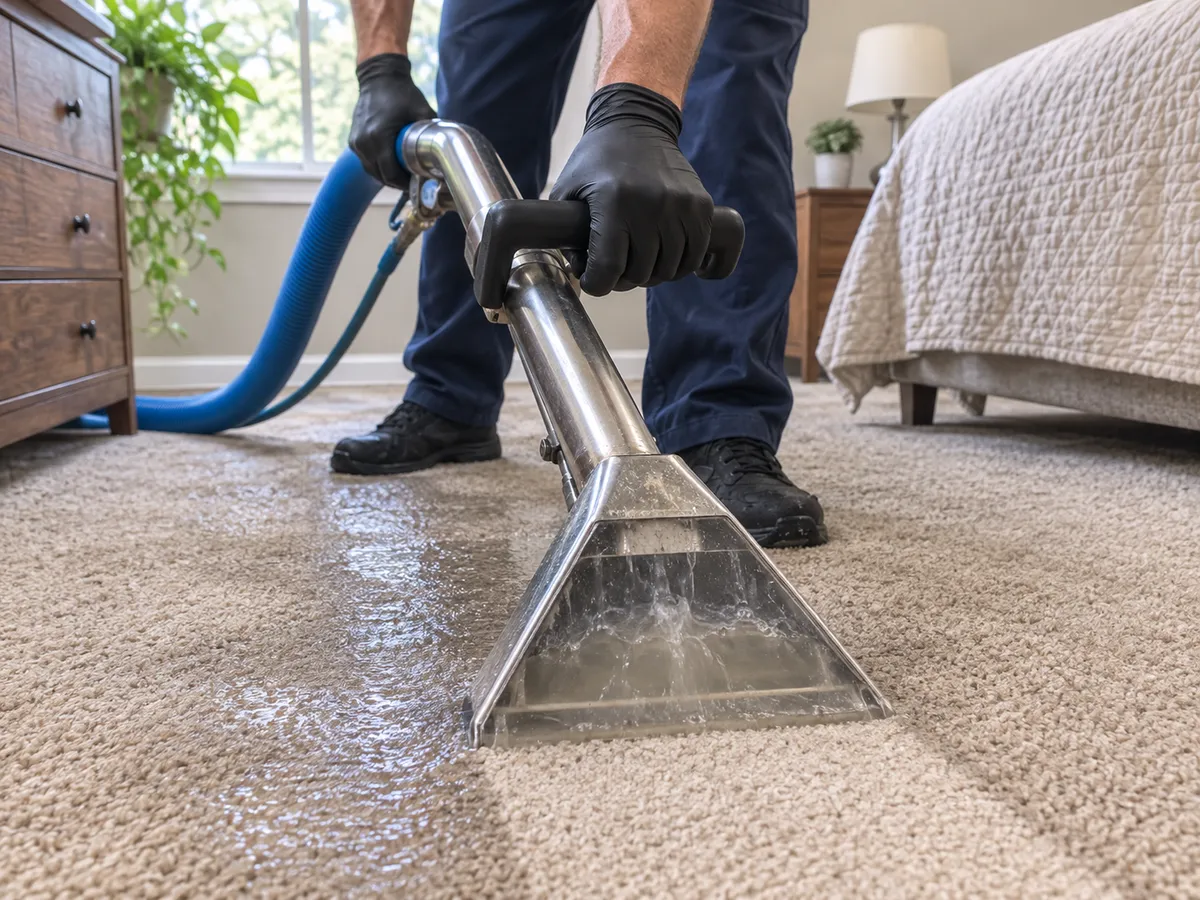
How the job usually runs
- Stop the water. Close the main shut-off or the valve at the fixture.
- Make it safe. Turn off power to wet rooms only if you can reach the panel without standing in water[CDC].
- Pump and extract. Pumps for deep water, extraction wands for carpet and pad, squeegees for tile.
- Set drying. Air movers and dehumidifiers go in once standing water is gone.
Do
- Photograph each room before anything is moved[FEMA].
- Lift furniture onto blocks or foil to protect legs and carpet.
Avoid
- Using a household vacuum on standing water.
- Walking through water near outlets or extension cords[CDC].
Emergency water removal and Houston homes
Housing here skews older: 47% of homes in the city of Houston were built before 1980, and the median year built is 1982[U.S. Census Bureau]. Older supply lines, drain lines and water heaters are common sources of leaks.
Houston Public Works takes reports of water leaks through 311 or the Houston 311 app; from outside the city, the 311 line is 713-837-0311[City of Houston 311].
More in Houston
- Water extraction in Houston
- Water mitigation in Houston
- Water damage cleanup in Houston
- Flood restoration in Houston
- Flood cleanup in Houston
- Sewage cleanup in Houston
- Burst pipe water damage in Houston
- Crawl space water removal in Houston
- Water damage restoration in Houston
Emergency water removal nearby
- Emergency water removal in Pearland
- Emergency water removal in Sugar Land
- Emergency water removal in Rosharon
General guide: emergency water removal explained.