Restoring a Humble home after rising water
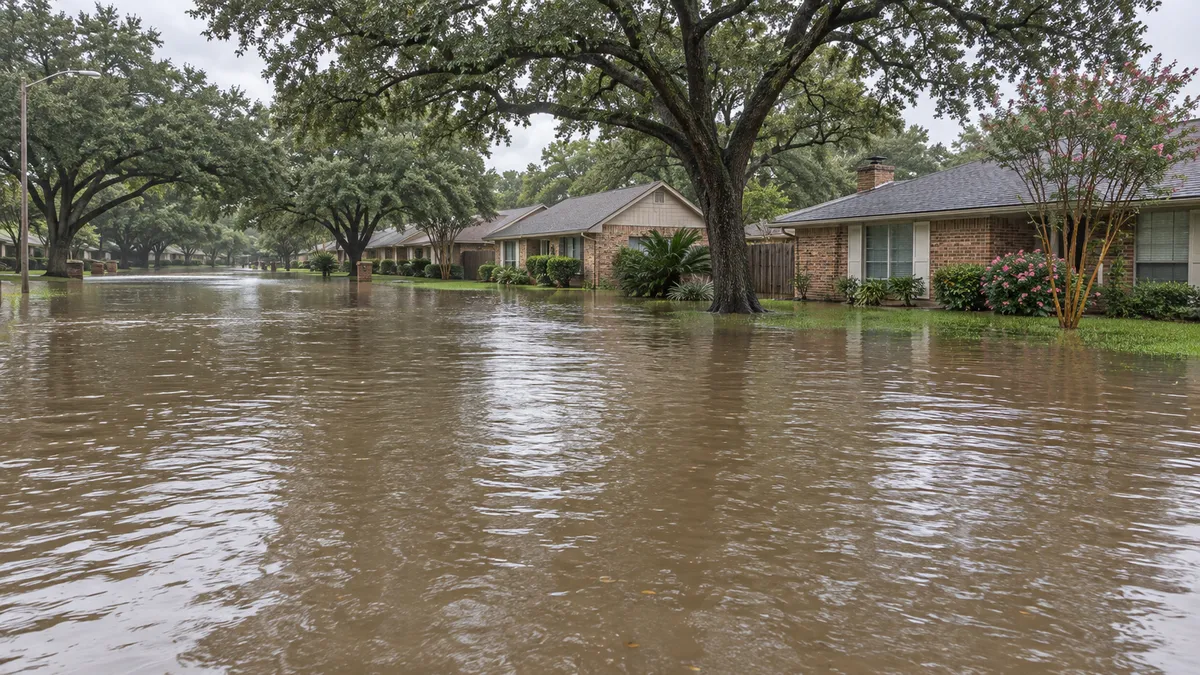
Under the IICRC’s 2026 statement, rising water from rivers or streams is a Category 3 example, and storm water is classified case by case after inspection[IICRC 2026 position statement]. Flood restoration plans start from that call.
FEMA advises removing drywall and insulation that floodwater touched and photographing all damage first[FEMA]. In a Humble home, that usually means a flood cut along the walls, removal of wet flooring and a full dry-out before anything new goes in.
Step by step
- Wait for safe entry. Do not go back in until officials say it is safe[FEMA].
- Document. Photos and video of every room.
- Remove. Wet drywall, insulation and flooring come out.
- Clean and dry. Surfaces cleaned, then dried to verified readings.
Do
- Wear rubber boots and gloves[CDC].
- Keep children and pets out of flooded rooms.
Inside a water damage restoration job in Humble
Most restoration work in Humble runs through the same six stages, whether the water came from a split supply line or a flooded street.
- Inspection and moisture mapping. The technician confirms the leak is stopped, then maps how far the water traveled with moisture meters and infrared cameras.
- Water removal. Standing water comes out first, with pumps for deep water and extraction wands for carpet and tile, so drying equipment is not fighting a puddle.
- Removal of what cannot dry. Materials that will not dry in time are cut out. The EPA flood guide draws the line at 24 to 48 hours: if a wet material cannot be cleaned and dried by then, it is tossed[EPA flood cleanup guide].
- Structural drying. Dehumidifiers and air movers run in a closed space, and the goal is relative humidity under 60 percent, ideally 30 to 50 percent[EPA].
- Cleaning. Anything the water touched is cleaned. Items that cannot be disinfected, including wall coverings, cloth, rugs and drywall, should be thrown away, according to the CDC[CDC].
- Final readings. Equipment stays until moisture readings in the walls, subfloor and framing return to normal, and those readings are written down.
How long drying takes in Humble
The EPA’s target is to dry wet materials within 24 to 48 hours[EPA]. A small clean-water leak caught early can often be dried in a few days. After a flood, the EPA warns that drying out can take several weeks[EPA flood cleanup guide].
Humid outdoor air works against you. The EPA’s guidance is to dehumidify when outdoor air is warm and humid, and to ventilate only when outside air is cold and dry[EPA]. On most days in Humble that means keeping windows closed and letting the dehumidifiers work.
Keep the equipment on and in place. Each time it is turned off, the air gets damp again and drying slows down.
Saving belongings and materials after water damage
Two questions decide it: was the water clean, and how fast can the item dry? Wet materials that cannot be cleaned and dried within 24 to 48 hours should be thrown out, according to the EPA[EPA flood cleanup guide]. With floodwater, the CDC says to throw away items that cannot be disinfected, like wall coverings, cloth, rugs and drywall[CDC].
Clean-water losses give you more options. The EPA says drywall, fiberglass insulation and carpet soaked only with clean water can sometimes be dried and kept, but it also suggests considering replacement because they dry slowly[EPA flood cleanup guide].
Take photos and video of damaged items before they are removed[FEMA].
Freeze damage in Humble
Gulf Coast homes are not built for long freezes. When temperatures hit 13°F in Houston in February 2021[NWS Houston/Galveston], pipes in attics, garages and outside walls burst as they thawed.
A frozen pipe often does not leak until it thaws. Know where your main shut-off is before a freeze, and if a pipe splits, close the main first and then call. Water from a burst supply line starts as Category 1, so fast extraction and drying can save more of the house.
What usually causes water damage in Humble
- Supply lines. Braided and plastic supply lines under sinks and toilets fail at the connection. A failed line can run at full pressure until the valve is closed.
- Water heaters. When the tank or fittings leak, water spreads across the slab from the garage, closet or utility room.
- Washers. Old rubber hoses split, and a washer drain that backs up puts dirty water on the floor.
- Air conditioning. Condensate lines clog and drain pans overflow, especially in long cooling seasons.
- Kitchen appliances. Ice maker lines and dishwasher hoses leak out of sight under the cabinets.
- Weather. Heavy rain, roof leaks and street flooding. Wind-driven rain that is contaminated counts as Category 3 water[IICRC 2026 position statement].
Knowing the source tells the crew what category the water is and where to look for spread.
Flood restoration and Humble homes
During Hurricane Harvey, the National Weather Service logged 38.88 inches of rain at the 4 S Humble gauge between August 25 and 31, 2017[NWS Houston/Galveston].
Any address in Humble can be checked against the FEMA flood map[FEMA Flood Map Service Center]. Harris County homeowners can also use the Flood Control District’s Flood Education Mapping Tool, which shows mapped floodplains relative to homes[Harris County Flood Education Mapping Tool].
More in Humble
- Emergency water removal in Humble
- Water extraction in Humble
- Water mitigation in Humble
- Water damage cleanup in Humble
- Flood cleanup in Humble
- Sewage cleanup in Humble
- Burst pipe water damage in Humble
- Crawl space water removal in Humble
- Water damage restoration in Humble
Flood restoration nearby
General guide: flood restoration explained.