Sewage backup cleanup in Atascocita
Sewage is one of the IICRC’s examples of Category 3 water[IICRC 2026 position statement], and the EPA flood cleanup guide recommends professional cleanup when sewage is involved[EPA flood cleanup guide]. The work is containment, removal of porous materials the sewage touched, cleaning and disinfection, then drying.
Until help arrives, stop using sinks, tubs, toilets and the washer so more water does not come back up. If you must go in, wear rubber boots and gloves[CDC].
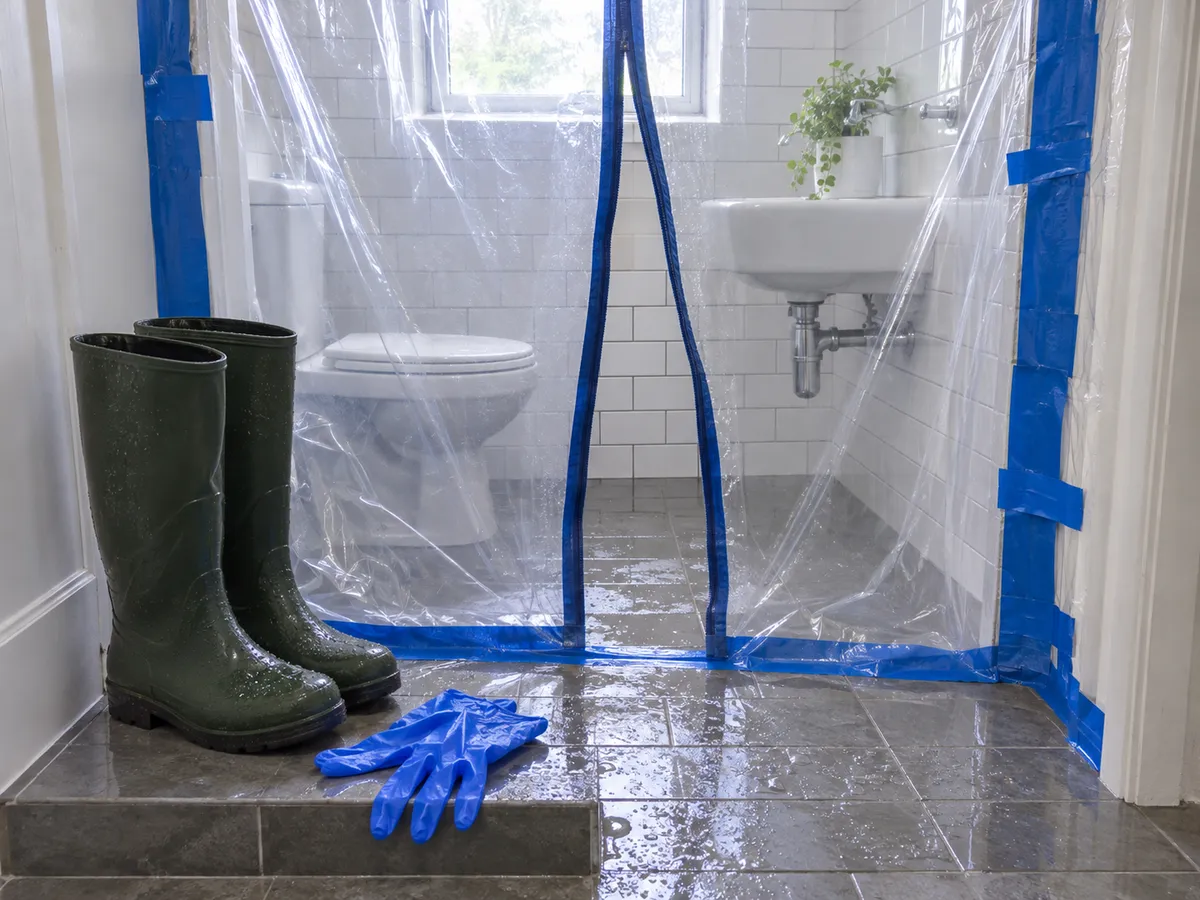
How the job usually runs
- Stop water use. No flushing, showers or laundry.
- Contain. Plastic barriers keep the area sealed off.
- Remove. Porous materials the sewage touched come out.
- Clean, disinfect, dry. Hard surfaces cleaned and the structure dried.
Do
- Keep children and pets away.
- Photograph the damage[FEMA].
Avoid
- Running fans that push air from the area into the house.
- Cleaning sewage-soaked carpet yourself.
Leaks you cannot see in a Atascocita house
On a slab foundation, which is common around Atascocita, water moves outward under walls and cabinets instead of draining down. A leak in a hall bath can show up as a damp closet two rooms away.
The AC system is easy to overlook. A clogged condensate line backs up the drain pan, and the EPA says pans that do not drain can let water into the HVAC system[EPA]. Keep the pan clean and the line flowing[EPA], especially when the unit is in the attic over finished rooms.
Places to check:
- Water heater pans and the floor around them
- Washer supply hoses and the wall behind them
- Sink cabinets and the subfloor under them
- Inside walls around pipes that leak or condense[EPA]
- Inside ductwork[EPA]
- Under flooring next to tubs, showers and toilets
Warning signs include a musty smell, swollen baseboards, peeling paint, flooring that lifts or cups, and a water bill that jumps with no change in use.
Hurricanes, power outages and drying
Beryl came ashore near Matagorda on July 8, 2024 as a Category 1 hurricane with 80 mph winds, dropping around 4 to 8 inches of rain on average and 10 to 15 inches in some swaths[NWS]. CenterPoint’s tracker showed more than 2.2 million homes and businesses without power[Houston Public Media].
Drying equipment runs on power. When the grid is down, a soaked house sits in heat and humidity, so ask whether the restoration company can bring generator power for its equipment.
Generator safety: never run a generator inside the home or garage, keep it at least 20 feet from windows, doors and vents, and use a battery-powered carbon monoxide detector[CDC]. After Beryl, the NWS counted two indirect deaths from carbon monoxide poisoning[NWS].
Questions to ask the restoration company
- What category is the water, and how does that change the plan?
- Where did the moisture meter show water, and how far did it spread?
- What needs to be removed, and why can it not be dried?
- How many dehumidifiers and air movers will run, and how often will someone check readings?
- Will I get a written scope and daily drying logs?
- Are the technicians on this job IICRC-certified?
Clear answers to these questions are a good sign. So is a technician who takes readings before quoting.
Water removal and drying equipment used in Atascocita
- Moisture meters. Pin and pinless meters read moisture in drywall, wood and subfloor so the crew can map the wet area and track progress.
- Thermal cameras. Infrared cameras show temperature differences that often point to wet areas behind walls and under floors. Readings are confirmed with a meter.
- Extraction units. Truck-mounted and portable extractors pull water from carpet and pad; submersible pumps handle deeper water.
- Air movers. High-velocity fans move air across wet surfaces so moisture evaporates faster.
- Dehumidifiers. Refrigerant and desiccant dehumidifiers pull that moisture out of the air so it does not soak back into the house.
- Wall cavity drying. Small holes or removed baseboards let air reach the inside of wet walls without tearing out the whole wall.
Once the house is dry
Ask for a copy of the final readings and keep them with your damage photos. In the weeks after, watch for a damp smell, new stains or swelling floors. Fix the source for good; the EPA is clear that the water problem must be fixed or it comes back[EPA].
Sewage cleanup and Atascocita homes
If several drains back up at once, especially during heavy rain, the problem may be in the public sewer. Water and sewer service around Atascocita comes from local utility districts rather than a single city department. The Texas PUC water utility search lets you look up the provider by name or county[Texas PUC water utility search], and the district’s number is on your water bill.
Much of the housing is recent. 38% of homes in the Atascocita census-designated place were built in 2010 or later, with a median year built of 2006[U.S. Census Bureau]. Newer homes still have supply hoses, water heaters and drain lines that can fail.
More in Atascocita
- Emergency water removal in Atascocita
- Water extraction in Atascocita
- Water mitigation in Atascocita
- Water damage cleanup in Atascocita
- Flood restoration in Atascocita
- Flood cleanup in Atascocita
- Burst pipe water damage in Atascocita
- Crawl space water removal in Atascocita
- Water damage restoration in Atascocita
Sewage cleanup nearby
General guide: sewage cleanup explained.