Water extraction for carpet, pad and tile
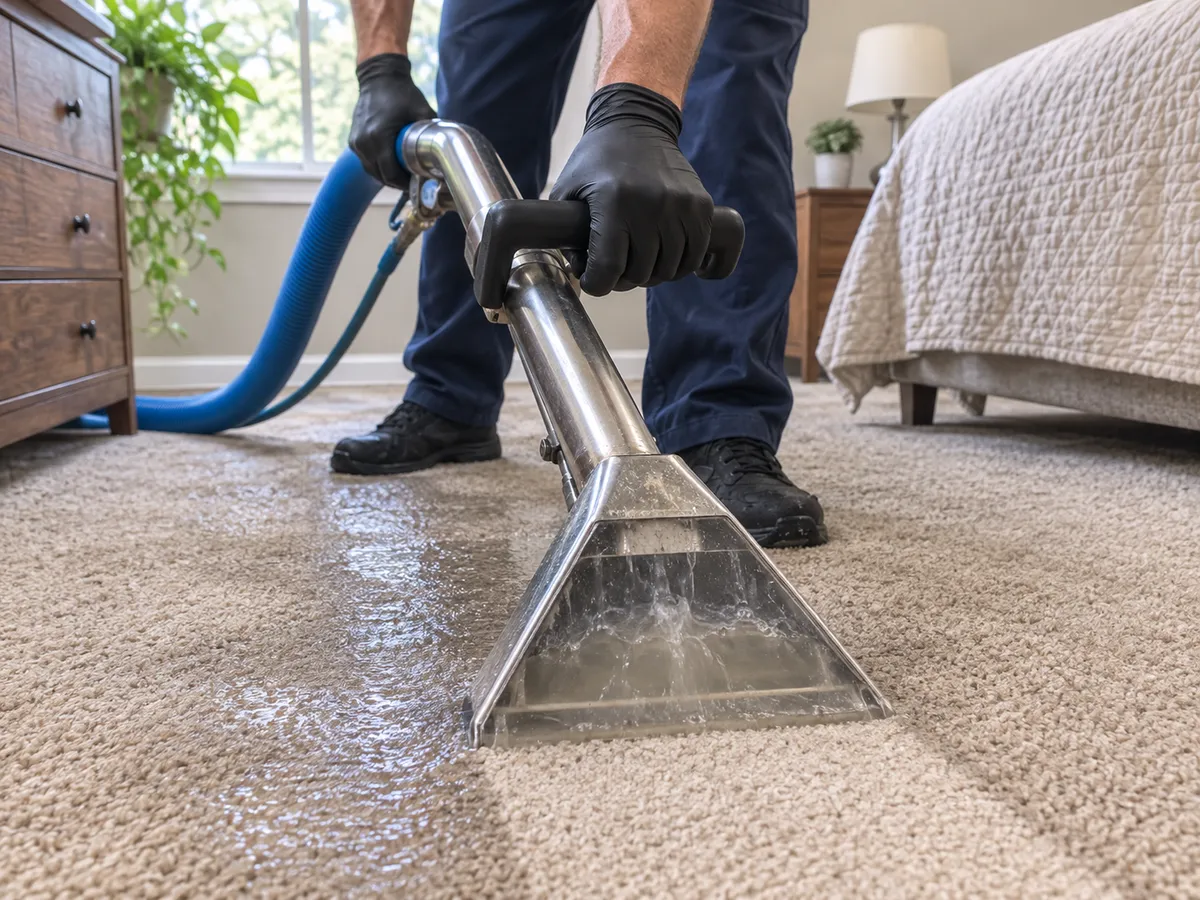
Fans cannot dry a floor that is still holding water. Water extraction in Atascocita uses weighted extraction tools on carpet, wands on hard surfaces and pumps for deep water, which removes far more water than evaporation alone.
Carpet pad acts like a sponge and is often pulled and discarded after extraction, while the carpet itself may be dried in place if the water was clean. The EPA’s drying window of 24 to 48 hours is the target for everything that stays[EPA].
Step by step
- Source off. Water shut off at the main or fixture.
- Extract. Carpet, pad and hard floors extracted until little water comes up.
- Pull pad if needed. Soaked pad is removed so the slab can dry.
- Dry and measure. Equipment runs until readings show dry.
Do
- Keep foot traffic off wet carpet.
- Move rugs and loose items off wet floors.
Avoid
- Leaving wet rugs folded on the floor.
- Running the heat to “dry things out” with doors closed.
Leaks you cannot see in a Atascocita house
Most homes around Atascocita are built on concrete slabs, so water does not drain into a crawl space. It spreads sideways under baseboards, cabinets and flooring into the next room. That is why the wet area on the meter is often larger than the wet area you can see.
The AC system is easy to overlook. A clogged condensate line backs up the drain pan, and the EPA says pans that do not drain can let water into the HVAC system[EPA]. Keep the pan clean and the line flowing[EPA], especially when the unit is in the attic over finished rooms.
Places to check:
- Water heater pans and the floor around them
- Washer supply hoses and the wall behind them
- Sink cabinets and the subfloor under them
- Inside walls around pipes that leak or condense[EPA]
- Inside ductwork[EPA]
- Under flooring next to tubs, showers and toilets
Watch for a damp smell, baseboards that swell, stains that grow, floors that cup or buckle, and a water bill higher than normal.
Structural drying in Atascocita’s humid climate
Small leaks found early dry in days; whole-house floods take longer, and the EPA says the drying-out process after a flood could take several weeks[EPA flood cleanup guide]. Either way, the work should start within 24 to 48 hours[EPA].
Humid outdoor air works against you. The EPA’s guidance is to dehumidify when outdoor air is warm and humid, and to ventilate only when outside air is cold and dry[EPA]. On most days in Atascocita that means keeping windows closed and letting the dehumidifiers work.
Leave the equipment running, keep doors to the drying area closed, and let the technician move it. Turning off air movers at night to cut noise can add days to the job.
Sewage backups in Atascocita
A backup from a toilet, tub or floor drain is grossly contaminated water under the IICRC categories[IICRC 2026 position statement]. The area is closed off, contaminated porous materials come out, and surfaces are cleaned before any drying starts.
A plumber or your utility handles the blockage itself. The restoration company handles the water that came into the house.
Flood safety first
Turn around at flooded roads. Six inches of fast-moving water can knock an adult down, and 12 inches of rushing water can sweep away most cars, according to the NWS[NWS].
With water in the house, turn off power at the breaker if you can do it safely, and disconnect appliances before power is restored[CDC]. Document the damage with photos before anything is moved[FEMA].
Once the house is dry
Keep the final moisture readings and the drying log with your photos. Check the area again over the next few weeks for odors, stains or swelling, which can mean water was missed. The EPA notes that cleanup is not finished until the water or moisture problem itself is fixed[EPA].
Water extraction and Atascocita homes
The Census Bureau counts 33,878 housing units in the Atascocita census-designated place; 88% are single-family detached houses and 83% of occupied homes are owner-occupied[U.S. Census Bureau].
Much of the housing is recent. 38% of homes in the Atascocita census-designated place were built in 2010 or later, with a median year built of 2006[U.S. Census Bureau]. Newer homes still have supply hoses, water heaters and drain lines that can fail.
More in Atascocita
- Emergency water removal in Atascocita
- Water mitigation in Atascocita
- Water damage cleanup in Atascocita
- Flood restoration in Atascocita
- Flood cleanup in Atascocita
- Sewage cleanup in Atascocita
- Burst pipe water damage in Atascocita
- Crawl space water removal in Atascocita
- Water damage restoration in Atascocita
Water extraction nearby
General guide: water extraction explained.