Water mitigation: limiting the damage
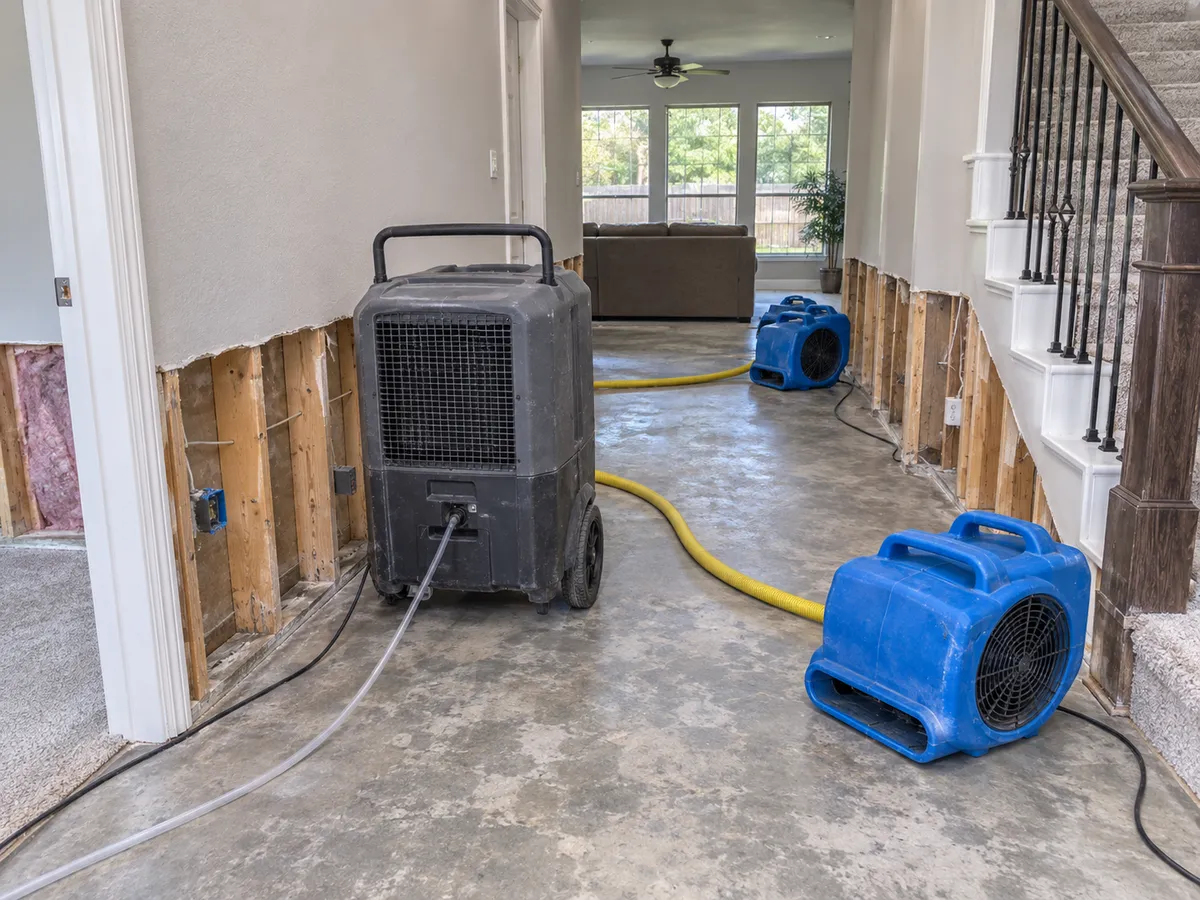
Mitigation is about limiting the damage. In Atascocita, that means getting the water out, cutting out wet drywall or insulation that will not dry, and running drying equipment until moisture readings come down.
Humidity matters as much as standing water. The EPA recommends keeping indoor humidity below 60 percent and drying wet materials within 24 to 48 hours[EPA]. In a humid Gulf Coast climate, dehumidifiers do much of the work.
How the job usually runs
- Inspect. Find the source and map how far the water went.
- Extract. Remove standing water from floors and carpet.
- Remove. Cut out drywall, insulation and pad that will not dry.
- Dry and monitor. Daily moisture readings until materials are dry.
Do
- Keep interior doors open to the wet area unless the crew says otherwise.
- Run the air conditioning to help pull moisture[CDC].
Avoid
- Opening windows on a humid day.
- Painting or covering walls before readings show dry.
Clean water, gray water and sewage: the three categories
Restoration companies sort water by how contaminated it is, using the IICRC categories. Category 1 comes from a clean source such as a supply line or faucet. Category 3 is grossly contaminated: sewage, waste line backflows from beyond a trap, seawater, rising rivers or streams, and contaminated wind-driven rain[IICRC 2026 position statement]. Category 2 falls between the two.
It also changes how the crew works. With Category 2 or 3 water, removal and cleaning happen first, under contamination controls, and drying comes after; Category 1 can go straight to drying[IICRC 2026 position statement]. Floodwater from a Atascocita creek or bayou is Category 3.
A clean leak does not stay clean forever. Time and temperature can change the category[IICRC 2026 position statement], and Gulf Coast heat speeds that up.
What can be saved and what usually goes
The deciding factors are the type of water and how long things stayed wet. Under the EPA flood guide, if something cannot be cleaned and made dry inside a day or two, it is discarded[EPA flood cleanup guide], and the CDC adds that items which cannot be disinfected, such as wall coverings, cloth, rugs and drywall, should be thrown away[CDC].
Clean-water losses give you more options. The EPA says drywall, fiberglass insulation and carpet soaked only with clean water can sometimes be dried and kept, but it also suggests considering replacement because they dry slowly[EPA flood cleanup guide].
Take photos and video of damaged items before they are removed[FEMA].
Storm season, outages and generator safety
Hurricane Beryl made landfall near Matagorda as a Category 1 hurricane early on July 8, 2024, and brought widespread power outages to the region[NWS Houston/Galveston]. More than 2.2 million homes and businesses lost power, based on the CenterPoint outage tracker[Houston Public Media].
An outage matters for water damage because dehumidifiers and air movers need electricity, and without air conditioning indoor humidity climbs quickly. Restoration crews often bring generators to keep drying on schedule.
Generator safety: never run a generator inside the home or garage, keep it at least 20 feet from windows, doors and vents, and use a battery-powered carbon monoxide detector[CDC]. After Beryl, the NWS counted two indirect deaths from carbon monoxide poisoning[NWS].
What to ask before work starts
- What category is the water, and how does that change the plan?
- Where did the moisture meter show water, and how far did it spread?
- What needs to be removed, and why can it not be dried?
- How many dehumidifiers and air movers will run, and how often will someone check readings?
- Will I get a written scope and daily drying logs?
- Are the technicians on this job IICRC-certified?
A good restoration company will answer these without hesitating and will take readings before giving a plan.
What the restoration crew brings
- Moisture meters. Pin and pinless meters read moisture in drywall, wood and subfloor so the crew can map the wet area and track progress.
- Thermal cameras. Infrared cameras show temperature differences that often point to wet areas behind walls and under floors. Readings are confirmed with a meter.
- Extraction units. Truck-mounted and portable extractors pull water from carpet and pad; submersible pumps handle deeper water.
- Air movers. High-velocity fans move air across wet surfaces so moisture evaporates faster.
- Dehumidifiers. Refrigerant and desiccant dehumidifiers pull that moisture out of the air so it does not soak back into the house.
- Wall cavity drying. Small holes or removed baseboards let air reach the inside of wet walls without tearing out the whole wall.
Water mitigation and Atascocita homes
The Census Bureau counts 33,878 housing units in the Atascocita census-designated place; 88% are single-family detached houses and 83% of occupied homes are owner-occupied[U.S. Census Bureau].
In February 2021 the National Weather Service recorded 13°F in the city of Houston[NWS Houston/Galveston]. Harris County was among the counties FEMA opened for individual disaster assistance after that storm[FEMA].
More in Atascocita
- Emergency water removal in Atascocita
- Water extraction in Atascocita
- Water damage cleanup in Atascocita
- Flood restoration in Atascocita
- Flood cleanup in Atascocita
- Sewage cleanup in Atascocita
- Burst pipe water damage in Atascocita
- Crawl space water removal in Atascocita
- Water damage restoration in Atascocita
Water mitigation nearby
General guide: water mitigation explained.