Cleaning up after a leak in Atascocita
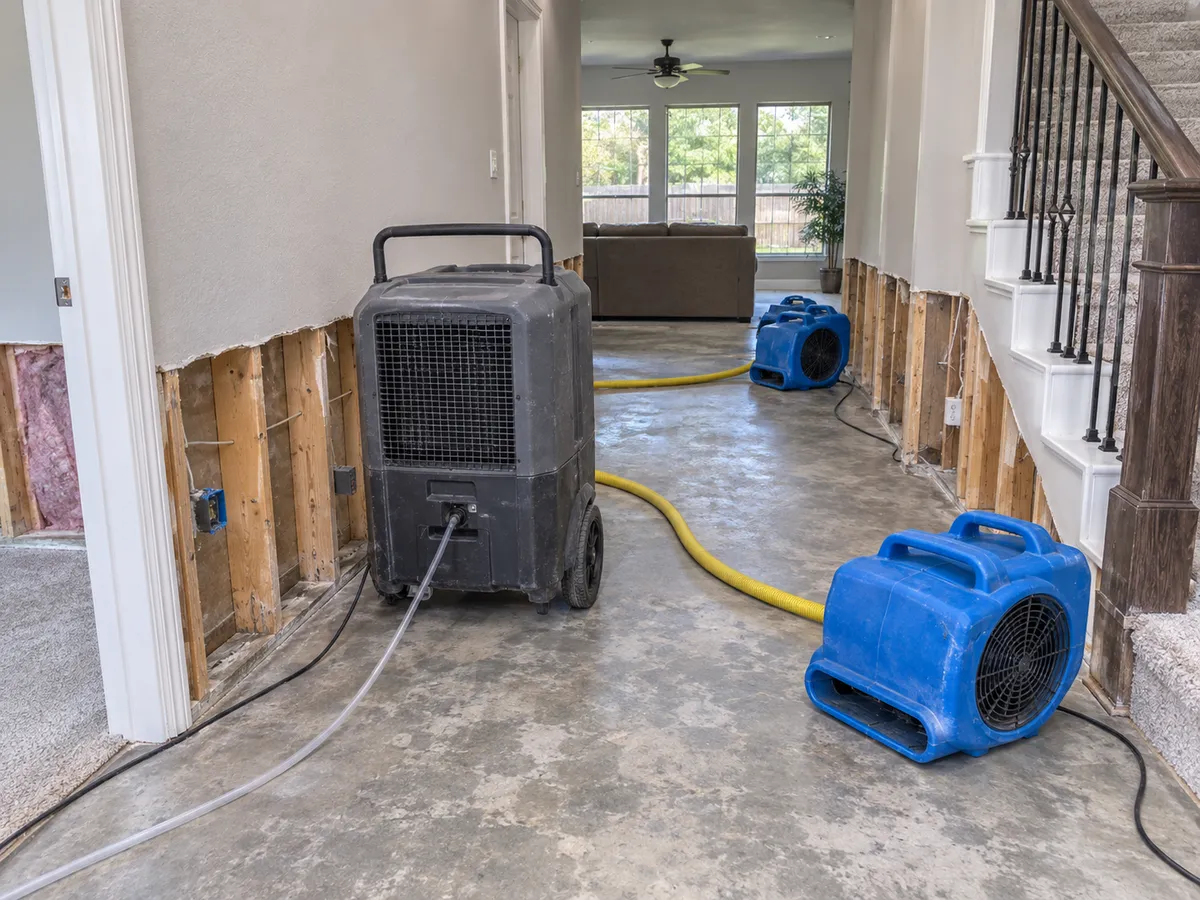
Cleanup is more than mopping. In Atascocita, a water damage cleanup crew removes soaked carpet pad and baseboards, cleans what the water touched, bags debris and sets drying equipment.
FEMA warns against waiting to clean up, because damage spreads while materials stay wet[FEMA]. Photograph the damage first so you have a record[FEMA].
Step by step
- Document. Photos and video of every wet area.
- Remove. Soaked pad, baseboards and debris bagged and hauled out.
- Clean. Surfaces the water touched are cleaned.
- Dry. Air movers and dehumidifiers run until dry.
Do
- Wear gloves when handling wet materials[CDC].
- Set aside items you want to keep so the crew knows.
Avoid
- Throwing things out before you photograph them[FEMA].
- Stacking wet boxes against walls.
Water categories and why they change the job
Restoration companies sort water by how contaminated it is, using the IICRC categories. Category 1 comes from a clean source such as a supply line or faucet. Category 3 is grossly contaminated: sewage, waste line backflows from beyond a trap, seawater, rising rivers or streams, and contaminated wind-driven rain[IICRC 2026 position statement]. Category 2 falls between the two.
It also changes how the crew works. With Category 2 or 3 water, removal and cleaning happen first, under contamination controls, and drying comes after; Category 1 can go straight to drying[IICRC 2026 position statement]. Floodwater from a Atascocita creek or bayou is Category 3.
A clean leak does not stay clean forever. Time and temperature can change the category[IICRC 2026 position statement], and Gulf Coast heat speeds that up.
Saving belongings and materials after water damage
Two questions decide it: was the water clean, and how fast can the item dry? Wet materials that cannot be cleaned and dried within 24 to 48 hours should be thrown out, according to the EPA[EPA flood cleanup guide]. With floodwater, the CDC says to throw away items that cannot be disinfected, like wall coverings, cloth, rugs and drywall[CDC].
Clean-water losses give you more options. The EPA says drywall, fiberglass insulation and carpet soaked only with clean water can sometimes be dried and kept, but it also suggests considering replacement because they dry slowly[EPA flood cleanup guide].
Photograph everything before it goes to the curb[FEMA], and keep a list of what was removed.
Freeze damage in Atascocita
Gulf Coast homes are not built for long freezes. When temperatures hit 13°F in Houston in February 2021[NWS Houston/Galveston], pipes in attics, garages and outside walls burst as they thawed.
A frozen pipe often does not leak until it thaws. Know where your main shut-off is before a freeze, and if a pipe splits, close the main first and then call. Water from a burst supply line starts as Category 1, so fast extraction and drying can save more of the house.
What to ask before work starts
- Which IICRC category does this water fall into?
- Can you show me the moisture readings and the wet area on a sketch?
- Which materials are coming out, and which can be dried in place?
- When will you take readings, and when do you expect the job to be dry?
- Do I need a plumber to stop the source first?
- Will you put the scope of work in writing before you start?
Clear answers to these questions are a good sign. So is a technician who takes readings before quoting.
The drying equipment and what it does
- Moisture meters. Pin and pinless meters read moisture in drywall, wood and subfloor so the crew can map the wet area and track progress.
- Thermal cameras. Infrared cameras show temperature differences that often point to wet areas behind walls and under floors. Readings are confirmed with a meter.
- Extraction units. Truck-mounted and portable extractors pull water from carpet and pad; submersible pumps handle deeper water.
- Air movers. High-velocity fans move air across wet surfaces so moisture evaporates faster.
- Dehumidifiers. Refrigerant and desiccant dehumidifiers pull that moisture out of the air so it does not soak back into the house.
- Wall cavity drying. Small holes or removed baseboards let air reach the inside of wet walls without tearing out the whole wall.
Water damage cleanup and Atascocita homes
Much of the housing is recent. 38% of homes in the Atascocita census-designated place were built in 2010 or later, with a median year built of 2006[U.S. Census Bureau]. Newer homes still have supply hoses, water heaters and drain lines that can fail.
The Census Bureau counts 33,878 housing units in the Atascocita census-designated place; 88% are single-family detached houses and 83% of occupied homes are owner-occupied[U.S. Census Bureau].
More in Atascocita
- Emergency water removal in Atascocita
- Water extraction in Atascocita
- Water mitigation in Atascocita
- Flood restoration in Atascocita
- Flood cleanup in Atascocita
- Sewage cleanup in Atascocita
- Burst pipe water damage in Atascocita
- Crawl space water removal in Atascocita
- Water damage restoration in Atascocita
Water damage cleanup nearby
General guide: water damage cleanup explained.